

Ideas Need Space.
Actual, physical space. And reasons to be there.

I’ve been thinking a lot about space lately. The rooms we gather in. The places where ideas either show up or quietly die because, well, that’s sometimes what happens to ideas. Especially, most of mine.
Maybe it’s because I just had to close a space that meant a lot to Milwaukee’s tech innovation community, to the beloved cafe staff, my partner in crime Adam, and to me. But that’s a topic for another newsletter.
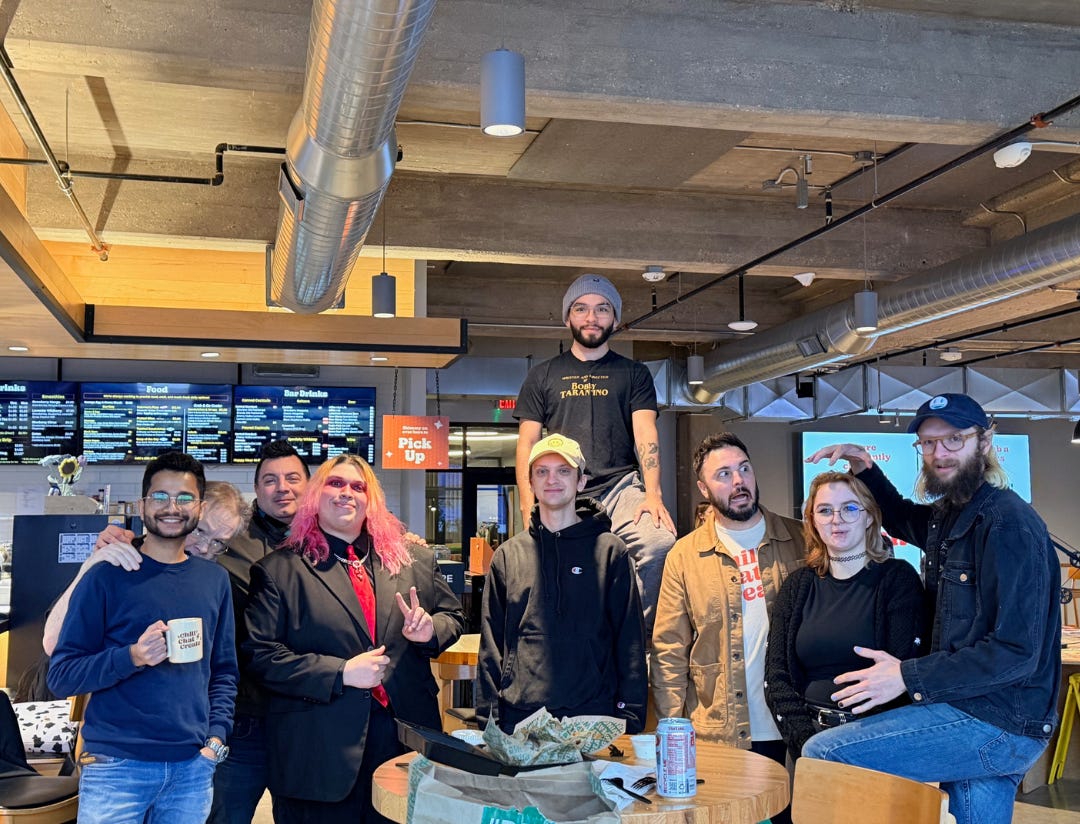
Experience Milwaukee at the Wantable Cafe staff and friends on closing day.
Maybe it’s because of a recent conversation with executives at ULINE about their 1.5M square foot space that helps drive innovation there.
You see, I spend a lot of time talking about talent, capital, and technology with people across Milwaukee and Wisconsin. But in all honesty, this rarely includes where innovation actually happens.
And I’m starting to believe that might be one of the biggest gaps in how we build tech and startup communities in Milwaukee. Ideas need space. The people with the ideas need space.
The space options we have today.
If you zoom out, most of the spaces we use fall into a few familiar buckets:
Bars
Restaurants
Coffee shops
Coworking spaces
Event venues
Each one comes with an implied purpose, whether we admit it or not.
Bars are typically for unwinding, socializing, and sometimes networking. Usually louder, usually later in the day.
Restaurants are transactional: they want you to eat, but rarely to linger too long.
Same with Coffee shops. Not to mention how small the tables are at most spots.
And speaking from a lot of experience, I often get odd stares and sometimes comments in bars and restaurants when I pop open my laptop or stay too long.
Coworking spaces should be the obvious answer. Sometimes they are. But they’re often optimized for solo productivity, not collective imagination (Sit by Me is working to change that).
Event venues work great. When there’s an event and when our various community-building groups can afford them. Mitobyte comes to mind: altruistic intention for the tech community.
Every space has a cost of use, even if it’s not explicit:
Actual cash money
Too much or not the right kind of noise
Time limits - they want you in and out
Or, the awkward feeling that you’re not supposed to be there unless you’re “doing business” in a very specific way
Conclusion: the spaces we currently have available come with tradeoffs. And most weren’t designed with early-stage idea conversations in mind.
So where are the gaps?
Here are the questions I can’t get out of my head. What kinds of spaces are missing? Are there Milwaukee places better designed for:
Small-group thinking
Founder-to-founder conversations
Operators sharing open and honestly
Investors listening more than pitching
Getting technologists, creatives, and business leaders in the same room without an agenda
Well, here are a few of the spaces I’ve stress-tested. You should check them out. And, let me know what spaces I’m missing.
A few spaces with coworking chops
Ward4. Awesome space, but inconsistent density and energy though I’m seeing a definite increase in both.
Anodyne on Bruce in the Walker’s Point Innovation District. High potential for what my friend Manny calls “cosmic collisions” - accidental meetups of the right people at the right time - but that needs to be nurtured for use by the tech community.
Idyll in Wauwatosa. Great energy, but not where the tech startups hang out, yet.
Lake Effect in West Allis. See my note on Idyll.
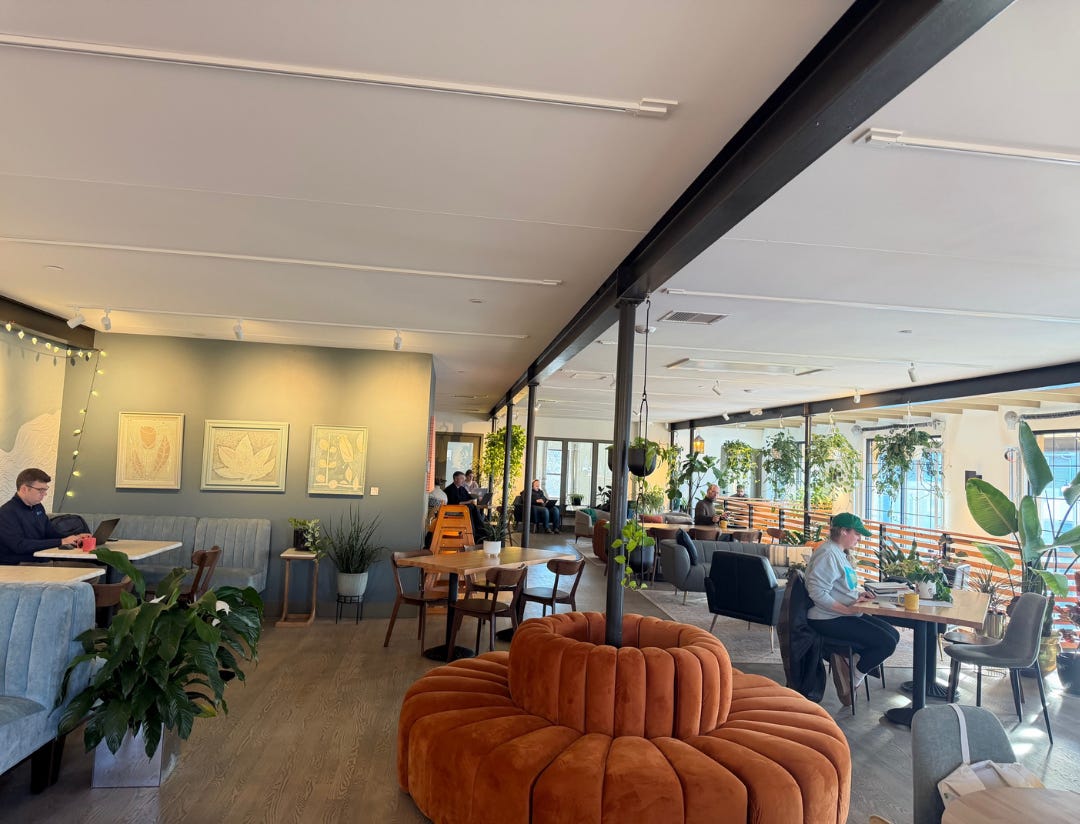
The upper level at Idyll Coffee in Wauwatosa.
A few spaces with massive potential for the broader tech community
Direct Supply Innovation Center on MSOE’s campus. Why, oh why, are we not activating this space more often?
All the spaces I mentioned in last week’s newsletter. Open to the public, please.
Cafe Centraal in Bay View. See my notes on restaurants above. Great space. Awesome food and beer lineup. Not sure they want this kind of attention.
And a few more below…
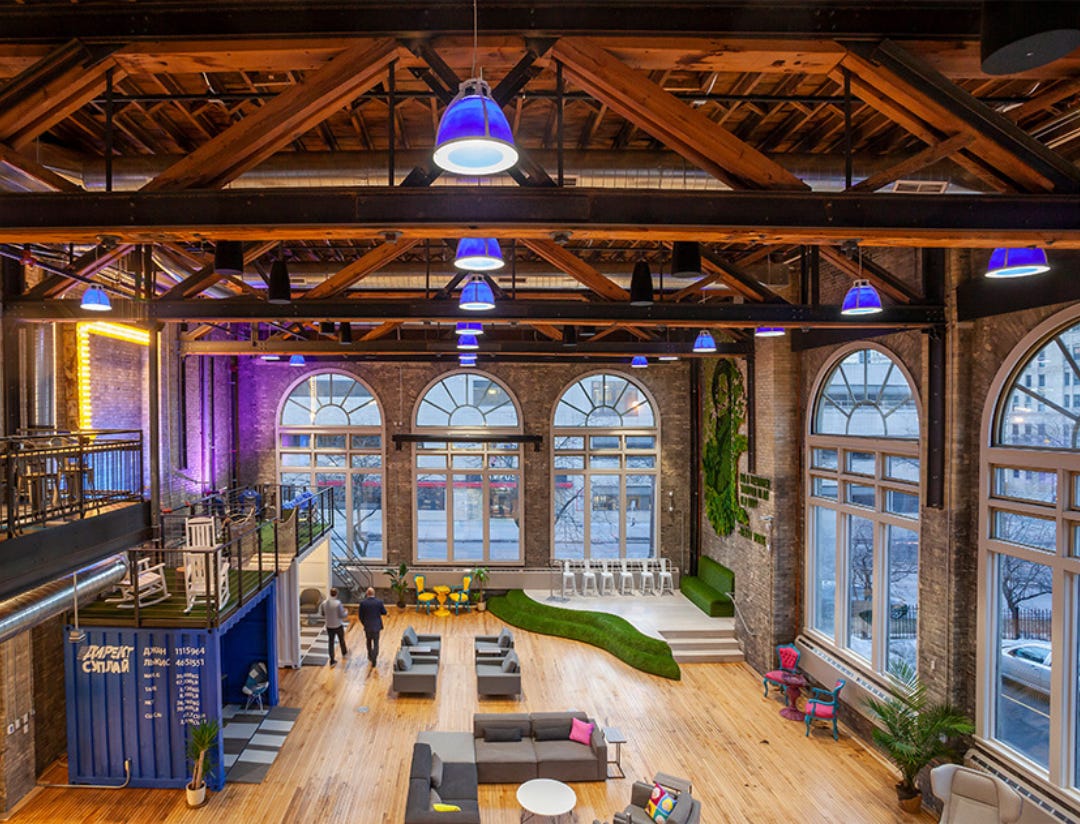
Direct Supply Innovation Center. Photo from their website.
Spaces I’m experimenting with.
And by that, I mean I’ve opened discussions with them for how I can bring the community together.
Small, curated brainstorms with founders, tech leaders, and investors. No pitch decks. Just intentional conversations to build stronger community relationships.
I’m working on something really, really interesting tied to a pre-game experience later this season. Think fireside chat with a startup / business focus that Ads fans and techies will LOVE.
Eagleknit Building in the Walker’s Point Innovation District
A flexible, untapped, hidden gem of a space that could serve the broader tech community. The future here is to be determined.
Manny and I are already hosting a casual Monday “visioning” meetup to start the week. Small group. Focused. Reflective. This is exactly the kind of thing he and I envision happens all the time in cities like San Francisco.
Now none of these efforts may come to light. But then again, maybe they all do.
Oh, and more to space reviews to come, too. Soon. (I see you Milky Way Tech Hub)
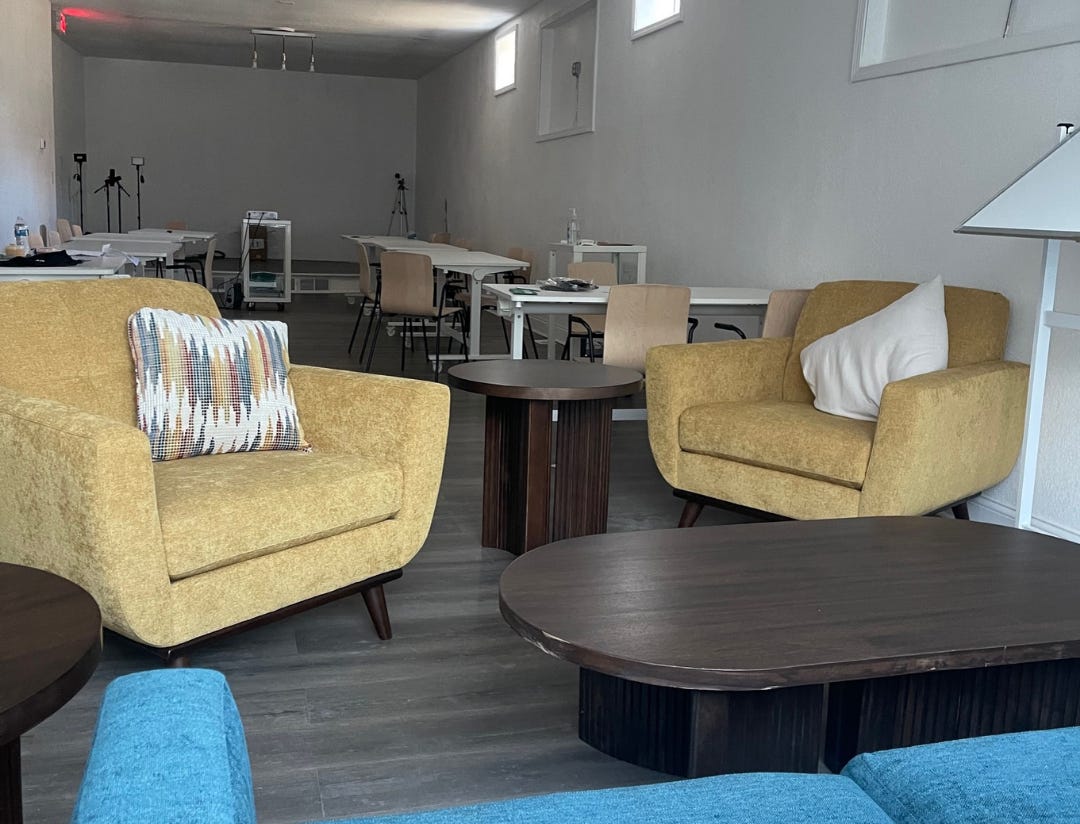
Milky Way Tech Hub coworking space. Photo from Milky Way Tech Hub founder and CEO Nadiyah Johnson.
Looking beyond Milwaukee.
This topic is also why I’m launching a tour to visit a different city each month to observe how other communities use space to support tech, innovation, and startups.
I’m looking for:
How often people gather
Who shows up consistently
What the room feels like
And whether ideas actually move after people leave
Then I want to bring those observations home and ask a simple question:
What would it look like if Milwaukee designed innovation spaces as intentionally as it designs festivals?
Because if we want better outcomes from our tech and startup ecosystem, we need to spend more time shaping the rooms.
All for now, from me.
Love you Milwaukee!
P.S. Thanks to everyone who commented on this LinkedIn post about space.
The biggest problem is critical mass. It's great that there are a bunch of different places that could support tech community meetups or coworking. The problem is there are not enough folks in that community actively using those sorts of spaces to saturate them to a level that builds community. If you took the 25 folks working inside of your cafe at any given time, and spread them across 10-15 places, without something like Sit By Me, they never find each other. This was critical when I opened up 42 Lounge back in 2013 -- we were one of the only places in the world doing what we did at that time, and the gold standard in town for the sort of content we delivered. So everyone from the nerd community went there, connected with each other, which allowed for a growth flywheel bringing new ideas and energy to fuel things further. That was also the case with Wantable/Experience Milwaukee Cafe -- organic growth brought orgs like Mitobyte which brought more people, which brought more orgs: a flywheel. But that effect is lighting in a bottle -- it's hard to capture, usually happens organically, and is extremely difficult to replicate intentionally. Dilution as mentioned above contributes to the problem. These issues can be overcome, but I don't think the problem is finding suitable space, I think it's physically getting people into the *same* space. And if doing it intentionally, to be able to sustain the business long enough while the community seeds take root, while having a plan B for viability if they do not.